01
Hours lost on repetitive processing
Format conversion, peak fitting, plotting, literature comparison — done by hand, every time.
SciPhys turns raw XRD, Raman, SEM and spectroscopy data from materials and physics labs into publication-ready figures, scientific interpretations, and the next experiment to run.
Materials, semiconductor and physics labs generate massive volumes of instrument data every day. Today it is scattered across instrument PCs, Excel files, Origin projects, local folders and paper drafts — invisible to AI, unusable as memory.
Format conversion, peak fitting, plotting, literature comparison — done by hand, every time.
Failed runs, parameters and instrument settings are forgotten the moment a student graduates.
Every experiment burns materials, instrument time and human hours — without a system that learns.
ChatGPT can read papers. It cannot read your XRD, Raman, SEM or electrical measurement files.
The bottleneck of scientific discovery is not the lack of papers — it is the messy, invisible state of real experimental data.
Upload an XRD, Raman, SEM or spectroscopy file — or sync directly from the instrument PC. SciPhys runs QC, fitting, phase identification and literature comparison in minutes, not hours.
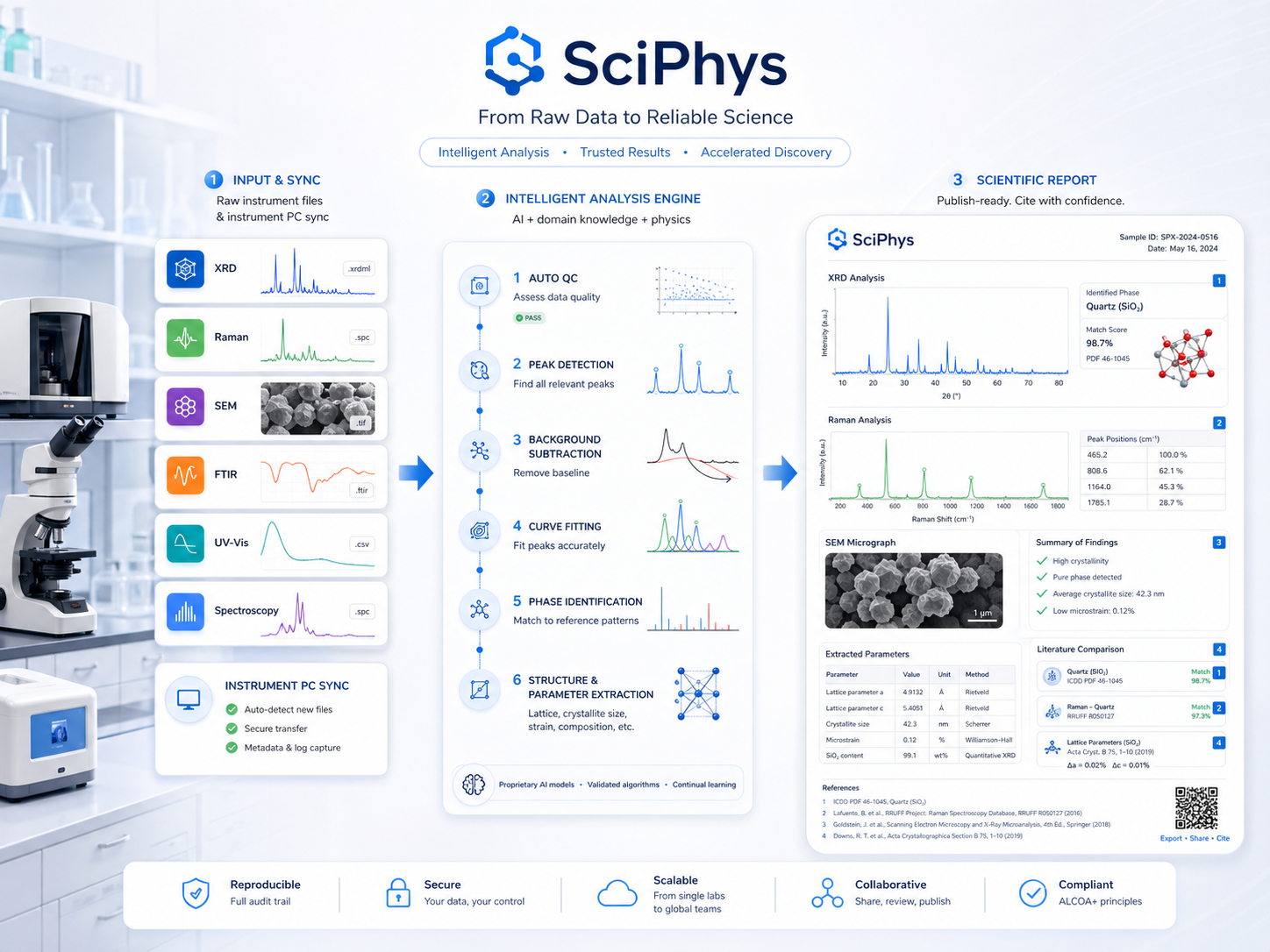
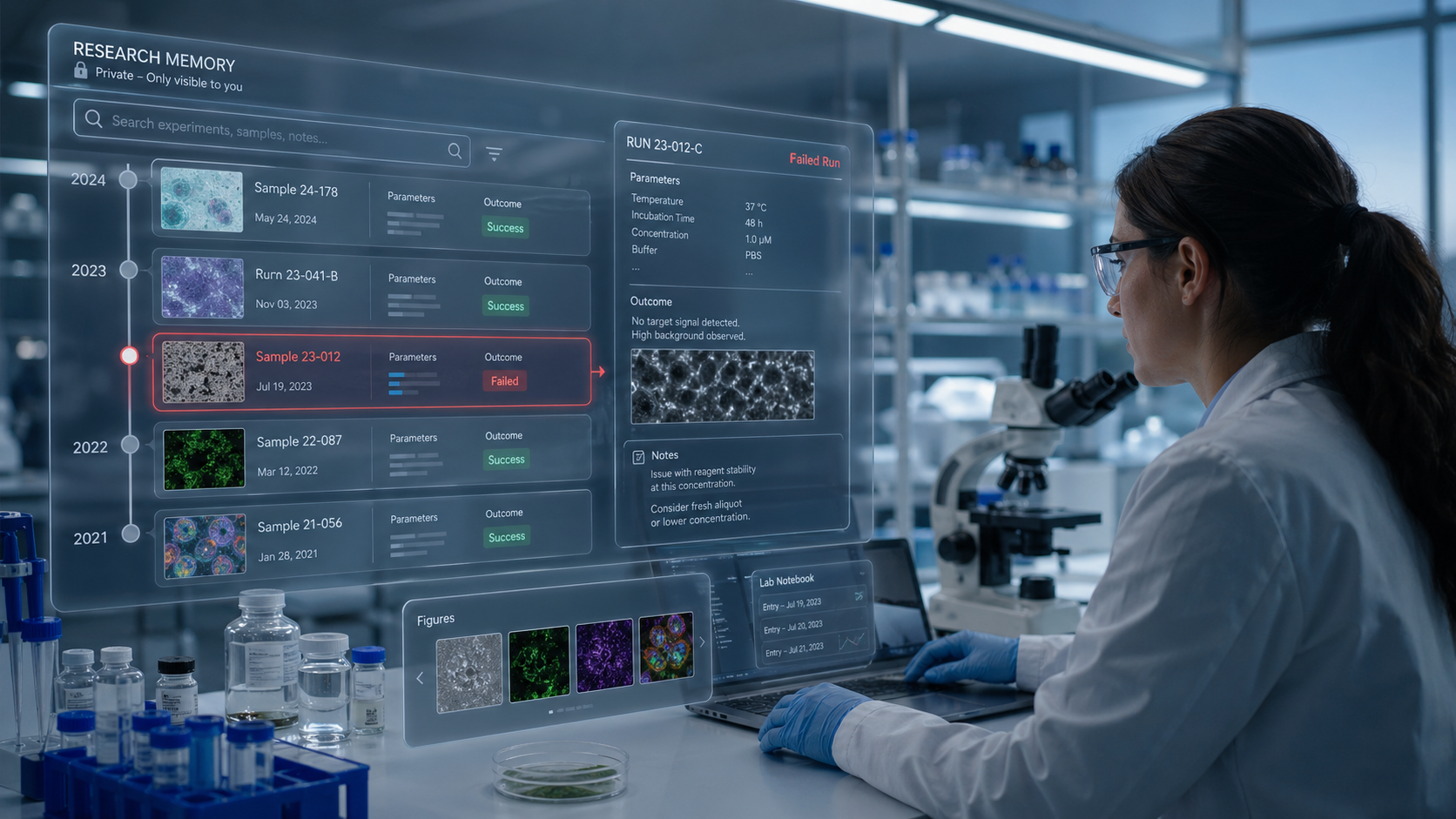
Every sample, condition, parameter, figure and decision is committed to a private Research Memory — your lab's second brain, growing with every run.
Drop in raw XRD, Raman, SEM, spectroscopy or electrical files. Or sync directly from the instrument PC.
Auto QC, peak detection, background subtraction, fitting, phase identification and parameter extraction.
Publication-ready figures in Nature, ACS, APS or IEEE styles — exported in one click.
Match against literature, prior runs and your lab's private knowledge base, automatically.
An agent proposes the next experiment — which variable to change, why, and what to expect.
Every analysis is committed to your lab's private Research Memory, growing with every run.
Watch a real XRD file run through the pipeline. No slides, no marketing — the same output a researcher gets in their workspace.
Clean baseline, low noise. Ready for analysis.
Auto-detected after background subtraction.
ABO₃ structure, cubic Pm-3m.
Lattice expansion vs. literature reference.
Matched to known perovskite phases.
Reduce strain — try 380°C for 30 min.
Demo data shown for illustration. Your files stay private to your workspace and are never used to train shared models.
A focused workspace for materials and physics teams. Six surfaces, one continuous research loop.
Perovskites, 2D materials, battery cathodes — every project gets a structured home, not a folder of files.
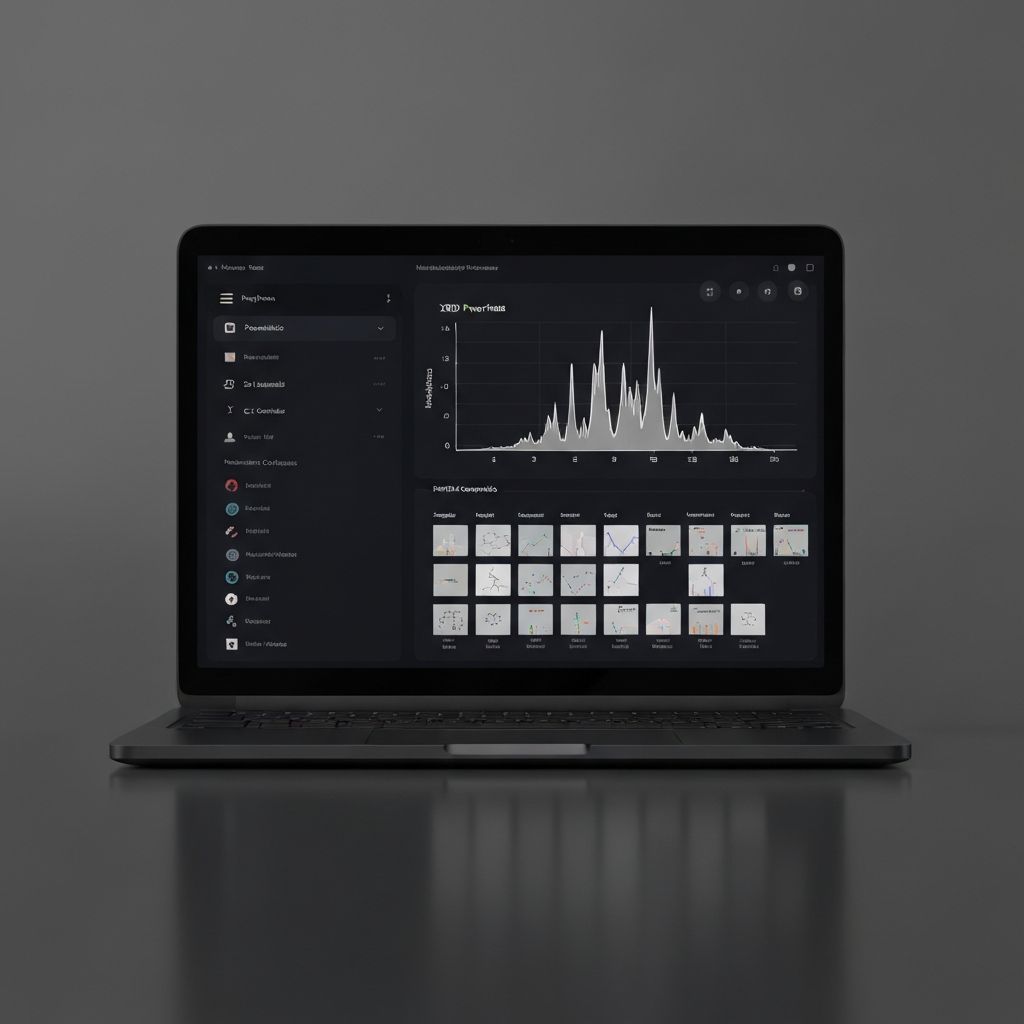
Auto QC, fitting and phase identification with cited reasoning.
Nature, ACS, APS and IEEE-style figures, methods and results drafts.
Every sample, condition, parameter and failed run becomes structured, searchable, reusable knowledge.
Helps you propose, screen and validate hypotheses faster — never replaces the scientist.
From a single researcher to a regulated R&D org — the same workspace, with controls that scale to the buyer.
For PhDs, postdocs and individual scientists. Drop in files, get publication-ready figures, build your own private memory.
For PI-led research groups and university labs. Sync directly from instrument PCs, share Research Memory across the team.
For semiconductor, battery and advanced-materials R&D. On-prem or VPC deployment with the controls enterprise data demands.
Built for semiconductor fabs, advanced-materials R&D and regulated labs — with the controls security and IP teams expect.
Lab data is isolated by default. Never shared, never used to train shared or third-party models.
Granular permissions per project, dataset and instrument. Scientist, reviewer, viewer, admin.
AES-256 at rest, TLS 1.3 in transit. Customer-managed keys (BYOK) available for enterprise.
Deploy inside your network when sensitive material or fab data cannot leave. EU & US data residency.
Every interpretation is auditable, editable and rejectable by a scientist. Models propose; people decide.
Every figure and conclusion traces back to its raw file, parameters and model version. Reproducible by design.
Capital is moving from chat to discovery. Lila Sciences has raised about $550M to build AI Science Factories — the new frontier is real experimental data, not text.
Citrine proves enterprise materials R&D SaaS. TetraScience proves the AI-native scientific data layer. Both markets are real, and growing.
Multimodal reasoning, code generation and tool use are finally good enough to read instrument data and reason like a graduate student.
There is no Cursor, no Notion, no Figma for materials and physics labs. SciPhys starts where the data is born: at the instrument.
We do not build instruments. We integrate with the ones the world already trusts — and become the intelligence layer above them.
A focused wedge: raw XRD file in, publication-ready figure, phase interpretation and next-experiment suggestion out.
Raman, SEM, AFM, FTIR, UV-Vis, electrical and thermal data — one project workspace, one team, one memory.
On-prem and edge deployment for semiconductor, battery and advanced-materials R&D — with audit, RBAC and data residency.
Embedded inside XRD, Raman, SEM and spectroscopy hardware — turning instruments from data sources into conclusion sources.
Closed-loop: model proposes → automated lab executes → data flows back → memory updates → hypothesis sharpens.
We are looking for materials, physics and semiconductor labs to join our early access program. Bring your hardest experiments. We will bring the copilot.
We'll never share your data. Lab pilots are private by default.