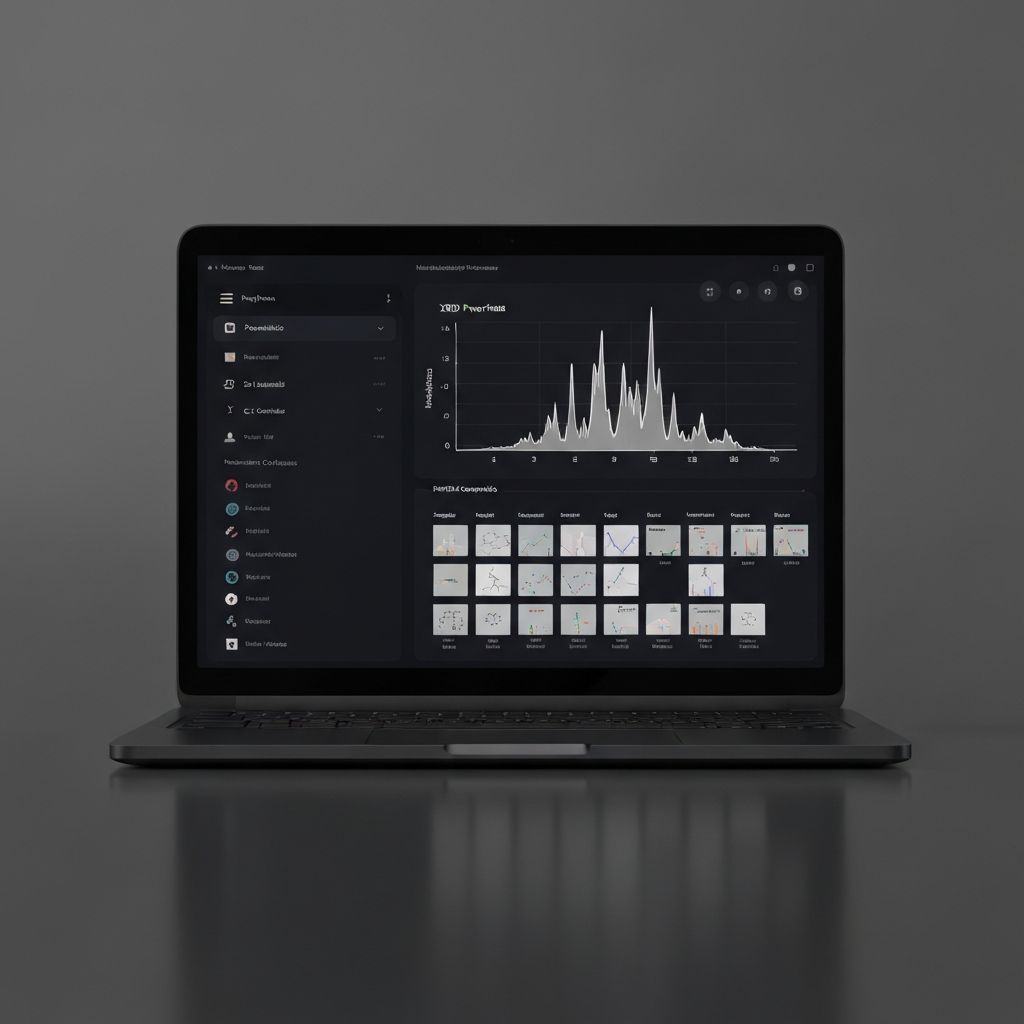
Materials AI

Materials AI grounded in experimental evidence.

SciPhys is built for the physical world: measurements, uncertainty, structure, literature, sample history and the decisions researchers make next.

Files

Instrument data becomes the primary evidence source.

Models

Domain algorithms produce measurable signals before AI explains them.

Knowledge

Literature and lab history provide context when available.

What it does

Built around scientific evidence.

Not generic AI pasted onto a lab

A general model can write plausible scientific text, but it does not automatically know the peak list, measurement settings, reference pattern, residuals or lab history behind a run.

  • SciPhys stores the raw data and the analysis trace.
  • AI explanations cite which evidence layer they are using.
  • Corrections and accepted interpretations can improve future workflows.

Reference data and literature as context

Materials interpretation often depends on structure files, reference patterns and papers. SciPhys is designed to bring those sources next to the experiment rather than leaving them scattered across tabs.

  • Connect phase assignments to reference peaks and structure fields.
  • Use literature metadata to support interpretation and writing.
  • Separate database-based claims from spectrum-based claims.

A system of record for experimental AI

The long-term advantage is the feedback loop: every upload, correction, comparison and report strengthens the lab's private knowledge graph.

  • Project to sample to data to analysis to conclusion.
  • Natural language search across experimental history.
  • Multi-data analysis for trends, anomalies and next experiments.

Workflow

From raw files to research decisions.

01

Ground

Start from measured data, not only prompts.

02

Reason

Combine algorithms, references, papers and lab context.

03

Improve

Use corrections and outcomes to sharpen the next analysis.

FAQ

Questions researchers ask first.

What does materials AI mean in SciPhys?+

It means AI workflows grounded in instrument data, physics-aware analysis, structure context, literature and lab history.

Does SciPhys use external databases?+

SciPhys is designed to work with reference patterns, structure files, literature metadata and user-provided lab data where available.

How is SciPhys different from a general AI assistant?+

SciPhys has access to the experimental object: files, metadata, computed peaks, fits, references, reports and lab history. A general assistant usually sees only the text a user pastes into it.