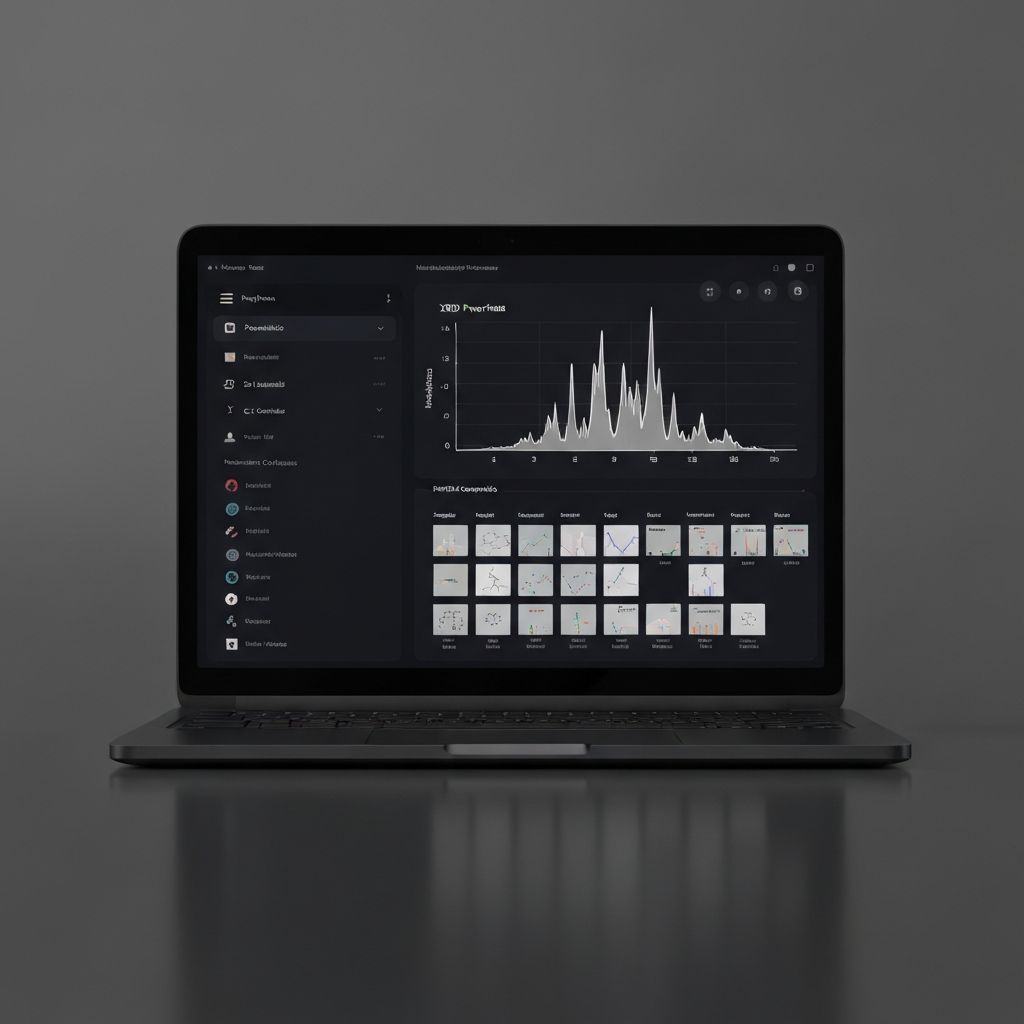
Instrument data becomes a research object
Upload is only the entry point. SciPhys records sample details, project context, instrument settings, analysis versions and researcher notes so later interpretation does not lose the experimental story.
- XRD, Raman, SEM, AFM, spectroscopy and battery files can share one archive.
- Metadata is designed for student workflows and principal investigator review.
- Every run can be revisited with the analysis state that produced the conclusion.
Physics-aware engines before language models
The core product is not a generic chat interface. Domain algorithms produce peaks, phases, fits, figures, residuals and confidence signals before AI writes a scientific explanation.
- XRD analysis uses peak evidence, reference patterns, structure data and refinement outputs.
- AI responses separate spectrum evidence, database evidence, literature evidence and lab history.
- Export paths are built for figures, tables, reports and supplemental materials.
The feedback loop compounds over time
Each upload, correction, report and accepted interpretation makes the workspace more useful for the next experiment. That is the product flywheel: data context, expert review, better models and faster decisions.
- Students get cleaner analysis and writing help.
- Advisors get visibility across the group.
- The lab accumulates private knowledge that generic AI cannot see.